



Imagine it takes months to develop a logistics platform, only to find out it cannot support peak shipment volumes, cannot communicate with your ERP, and actually increases manual work rather than eliminating it. Sadly, it occurs more frequently than businesses anticipate.
The relationship with the ideal partner to develop logistics software is not merely a procurement choice. It is a long-term business move that directly affects delivery schedules, cost management, visibility, and scalability. In this guide, we will also take you through the process of selecting a logistics software development company that fits your growth strategy, rather than your budget.
Begin With Clarity: Start by Defining Your Logistics Objectives
Businesses should be aware of the problem they wish the software to address before they assess vendors. Even the best development company will not be able to produce significant results without being clear.
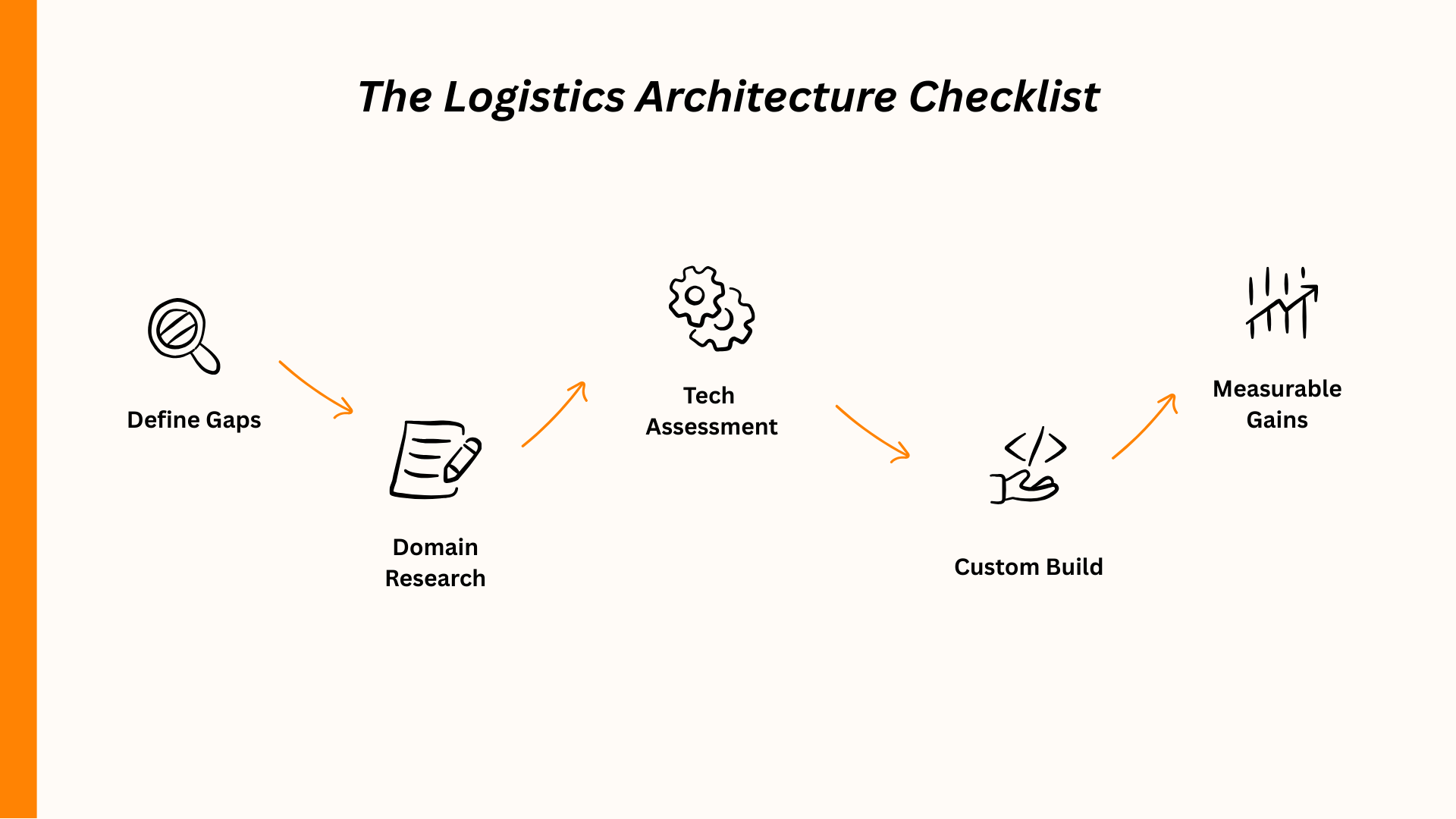
Begin by identifying operative gaps:
- Do we have delayed deliveries as a result of bad route planning?
- Is shipment tracking divided by systems?
- Are manual processes generating more mistakes?
- Does your existing system break down during peak demand?
Then define:
- Compulsory vs. optional features
- Necessary integrations (ERP, CRM, GPS, carrier APIs)
- Hypothesised scale (volume of shipment, users, places)
The process of software development company logistics development evaluation becomes more structured and objective when your internal objectives are established.
Consider Logistics Software Development Experience in the Industry
The logistics operations are high-volume, time-sensitive, and heavily integrated. A generic software developer might know how to code but not how transportation processes, warehouses and fleet optimisation work.
Look for:
- Practical experience with TMS, WMS, fleet, or supply chain platforms
- Established experience in enhancing delivery schedules or lowering expenses
- Knowledge of real-time tracking issues
- Knowledge in managing high-volume operational information
The risk is minimised by domain experience. It reduces the learning curve and gets your development partner to predict the operational bottlenecks before they turn into system failures.
Evaluate System Architecture and Technical Capabilities
A logistics system should be able to receive real-time updates, numerous integrations, and an increase in the volume of transactions, without decreasing its speed. This renders technical architecture a crucial consideration.
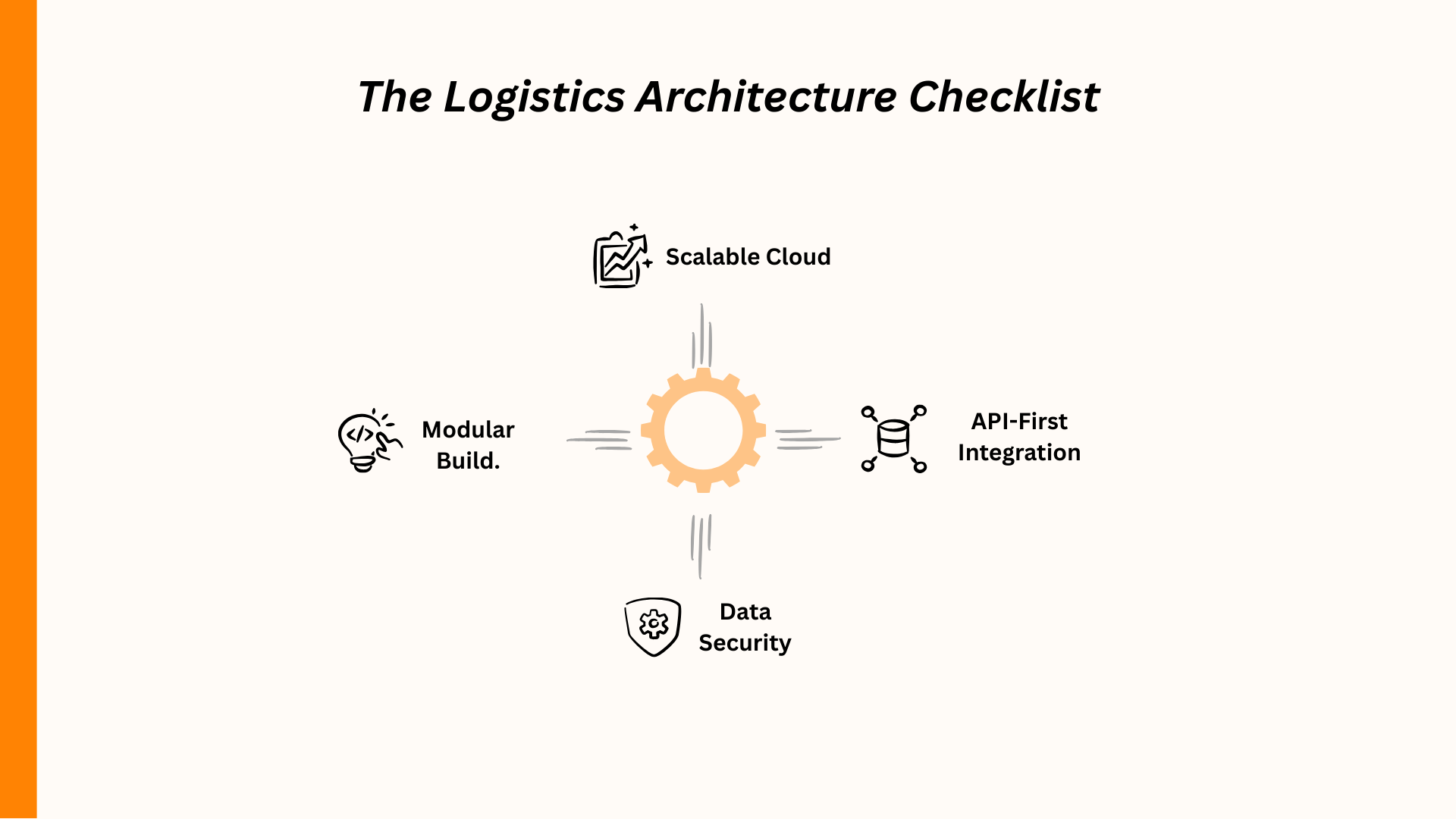
Key areas to assess:
Scalable Cloud infrastructure
Your system must be able to sustain 2-3x performance growth.
Integration-Ready Framework
Logistics systems are seldom geographically isolated. The API-first architecture will be used to make sure that the system is connected to ERP systems, accounting systems, GPS systems and third-party carriers.
Data Reliability and Data Security
Data on shipments, financial operations, and customer data should be safe and must be able to maintain high performance with a heavy load.
Modular Development Approach
A modular system enables you to have basic functionality initially and to extend to elaborate functionalities later without having to start afresh.
The appropriate logistics software development company will describe the architecture clearly and straightforwardly and align with your long-term roadmap of operations.
Examine their Development Process and Project Transparency
Project success is often measured by execution quality rather than technical capability. An organised and open development process will guarantee that your operations team and the development partner are on track.
Evaluate:
- The manner in which requirements are collected and verified
- Project milestones and task completion
- Reporting structure and frequency of communication
- Peak-load testing strategy
- Maintenance and optimisation services after launch
An effective logistics software development firm will offer realistic timelines, thoughtful planning and follow-up monitoring performance upon launch. Do not engage with partners who promise speed but do not specify how they will implement it.
Focus on Customisation, not One-Size-Fits-All Solutions
Each logistics operation contains its workflows. A multi-warehouse B2B distributor and retail last-mile delivery network are different. Your software should be synonymous with your model of operation.
Ensure the company can:
- Build custom routing logic
- Create dashboards according to operational roles
- Integrate legacy systems
- Automate processes as your business changes
Template-based systems might seem cheap at first glance, but they tend to have low flexibility and reduce scalability. The strategic logistics software development partner designs around your processes, rather than the other way around.
Examine Cost Structure and ROI over 5 Years.
The measure of cost must extend beyond initial development costs. The real answer is the ability of the system to minimise operational inefficiencies and enhance quantifiable results.
Evaluation Factor | Low-Cost Vendor | Strategic Logistics Software Partner |
|---|---|---|
Initial Cost | Lower | Moderate |
Customization | Limited | High |
Scalability | Restricted | Built for growth |
Integration Support | Basic | Structured & scalable |
Long-Term ROI | Uncertain | Measurable |
Ask about:
- Integration and maintenance cost
- Infrastructure hosting fees
- Scaling and upgrade costs
- Long-term support model
The appropriate logistics software development firm is interested in sustainable ROI, which involves decreasing delivery time, lowering fuel expenses, and automating manual organisation.
Assure Future-Readiness and Scalability
The activities of logistics are seldom stationary. The volumes of order grow, new sites are established, and integration needs are enhanced.
Your software must support:
- Increase in volumes of shipments without causing downtime
- Multi-location operations
- Inter-team access by multiple users
- Computerised automation and analytics
The ability to upgrade systems to future-readiness makes it possible to implement AI-based route optimisation or predictive demand planning as required, without the need to restructure your own platform.
At Quixta, our logistics software solutions are developed in a modular and integration-ready architecture, which allows the system to scale to 2-3x operational capacity without performance impairments. This gives businesses the certainty to expand whilst still ensuring efficiency in delivery.
Check Proven Results and Client Outcomes
Claims are easy. However, it is the measurable outcomes that actually matter.
Before selecting a logistics software development firm, consider:
- Performance metrics case studies
- Enhancement of delivery times
- The cost of operation is reduced
- Automation gains
- Extensive relationships with clients
Examples include businesses that have worked with Quixta and have attained:
- Optimised routing to deliver 20-30% faster
- Cost of operation cut by 20-30%
- 30-45 per cent decrease in manual coordination
- 40-50 increase in shipment visibility
These quantifiable gains represent operational effectiveness, not merely technical conveyance.
Why the Right Partner Matters More Than the Lowest Price
Logistics software will become the powerhouse of your operations. It manages deliveries, routes, warehousing, fleets and reporting. An improperly constructed system may interfere with service level agreements, undermine customer confidence, and add to the hidden costs.
The appropriate software development partner in logistics will perform as:
- A strategic advisor
- A scalability enabler
- A cost-control driver
- A long-term technology partner
Making decisions based on cost alone may prove to be costly in the long run. Selecting on grounds of expertise, transparency and scalability provides stability in operations over the long term.
Conclusion
Choosing a logistics software development firm will involve more than the analysis of proposals. It requires a systematic analysis of:
- Industry experience
- Technical architecture
- Customization capability
- Scalability readiness
- Open implementation procedure
- Established performance results
The appropriate partner will not merely create software but will create a system that enhances visibility, lowers the cost, and helps achieve long-term growth.
Our logistics software development services designed at Quixta are suited to high-volume, time-sensitive operations. We are concerned with quantifiable outcomes, integration-enabled solutions and scalable frameworks to ensure that logistics companies perform with confidence.
When you are working on your next logistics transformation, you should begin with the selection of the appropriate development partner. It is the key to the success of your operations.
Frequently Asked Questions
Search features domain experience, scalable architecture, customisation capability, transparent processes, and quantifiable client outcomes.
Simple systems can be completed in 3-4 months, and more complex systems can be completed in 6-12 months, based on the complexity and number of integrations.
Standard operations are compatible with ready-made platforms. The advanced development of logistics software is best suited to a company that has intricate workflows, integrations, and scaling needs.
Make sure that the system is cloud-based, modular, integration-ready and tested at peak operational loads.
It will be able to save fuel, automate business processes, optimise delivery schedules, and increase operational visibility – resulting in quantifiable cost reductions and efficiency improvements.
